Rope gives the body an outer edge. Breath makes the inner space visible.
“The rope does not bind. It listens.”
A shared state of regulation
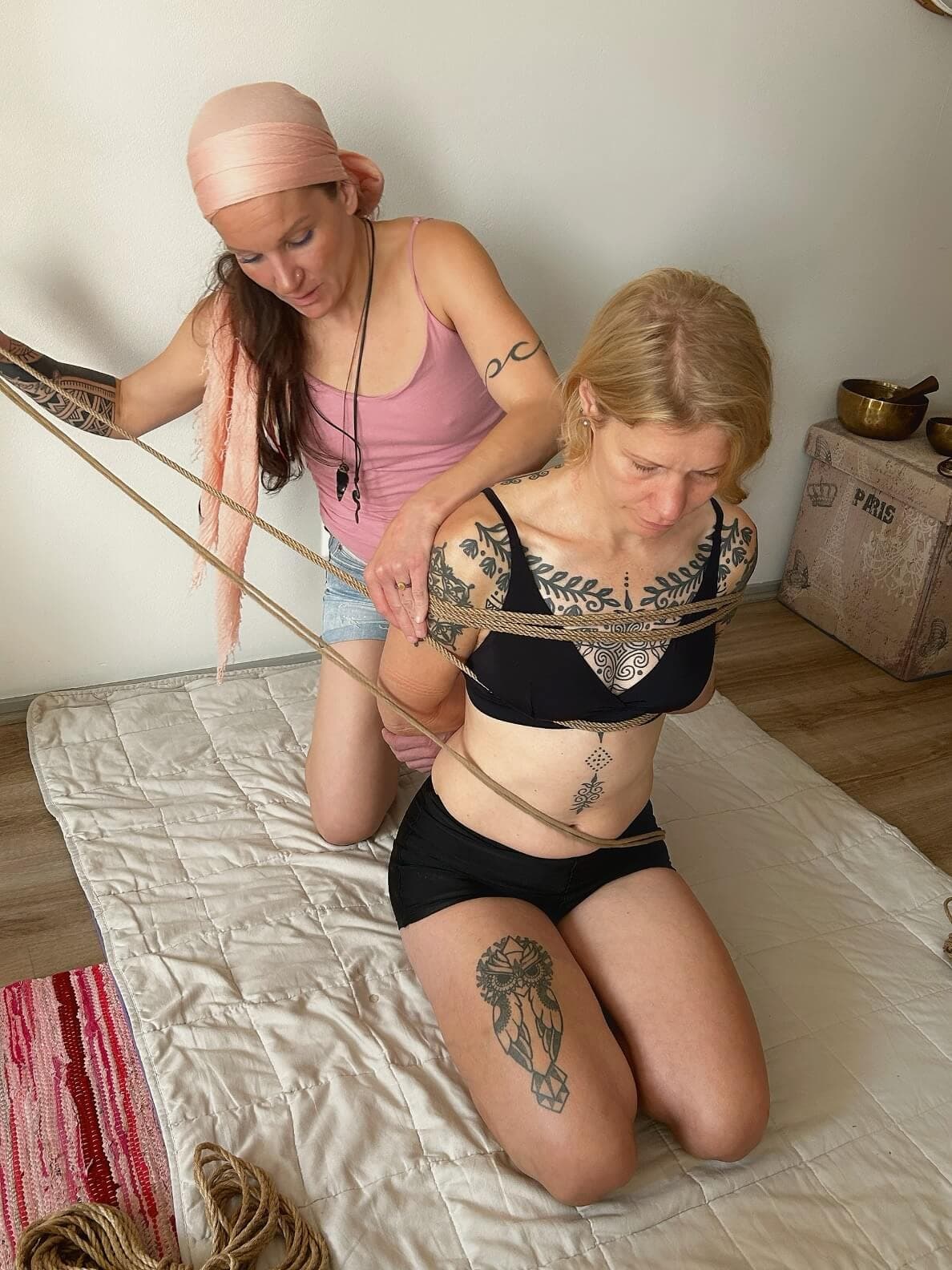
Rope and breath together form an embodied state of regulation. The rope gives the body an outer edge, breath makes the inner space visible, and the nervous system gets to respond and seek balance. This isn't a performance — it's an exploration of the nervous system and body awareness inside a safe relationship.
Where the inspiration comes from
This work isn't built on a single theory. It grows from the meeting of several fields — nervous system regulation, somatic trauma work, fascia research, and relational attunement.
- Stephen Porges·the nervous system sets the baseline
- Allan Schore·relationship makes safety possible
- Robert Schleip·the body itself produces sensing
- Peter Levine·trauma resolved by going slowly
- Interoception·listening inward
What happens in the body
The rope reduces movement and strengthens the body's boundaries — attention turns inward. Breath opens the space the rope has marked out. Micro-expressions on the face, shifts in voice, tension and release — the body speaks before words.
When the rope touches the skin,
the body responds honestly.
There is no room for pretense.
Tension and surrender,
control and letting go —
the rope teaches you to listen
to what the body already knows.
Boundaries, consent, and nervous system safety
Boundaries are not an obstacle to depth, but its foundation.
In shibari-inspired somatic work, rope is not a means of control but a way to explore the body's boundaries, trust, and presence. Safety is built through clear consent, continuous communication, and the freedom to change or stop the practice at any time. The rope does not cause pain or restrict breathing, and it can always be adjusted or removed.
How a session unfolds · about two hours
- 30 min
Opening conversation
intention, background, any limits
- —
Rope
simple ties only, never suspensions
- 60–75 min
Breathing practice
biodynamic breathing. Ropes are released before the final round.
- 15 min
Integration
silence, return to the body
- 15–20 min
Closing conversation
putting it into words, support for the way home
Core principles
safety before intensity
consent before process
presence before technique
the body knows more than the mind
the nervous system sets the pace